Canva has made it possible for almost anyone in an organization to create a flyer, social media post, or presentation.
For teams that can’t rely on a professional designer for every project, that’s a big advantage. Staff can create what they need, when they need it.
But knowing what to say in an event flyer or social media post doesn’t necessarily mean knowing how to design it in a way that reflects the brand.
And when people across departments are making design choices independently, the results can start to look like they came from different organizations.
When Convenience Creates More Work
Without a coordinated approach to Canva, staff may be working with different versions of brand assets, choosing designs that don’t reflect the organization’s identity, or spending unnecessary time figuring out how to create something that should be relatively simple.
The impact goes beyond how the finished materials look. Communications teams may find themselves answering the same questions, correcting designs, and managing work that Canva was supposed to make easier.
The opportunity isn’t to take design work away from staff. It’s to make Canva easier for them to use while helping the organization maintain a consistent brand.
Design Support That Makes a Difference
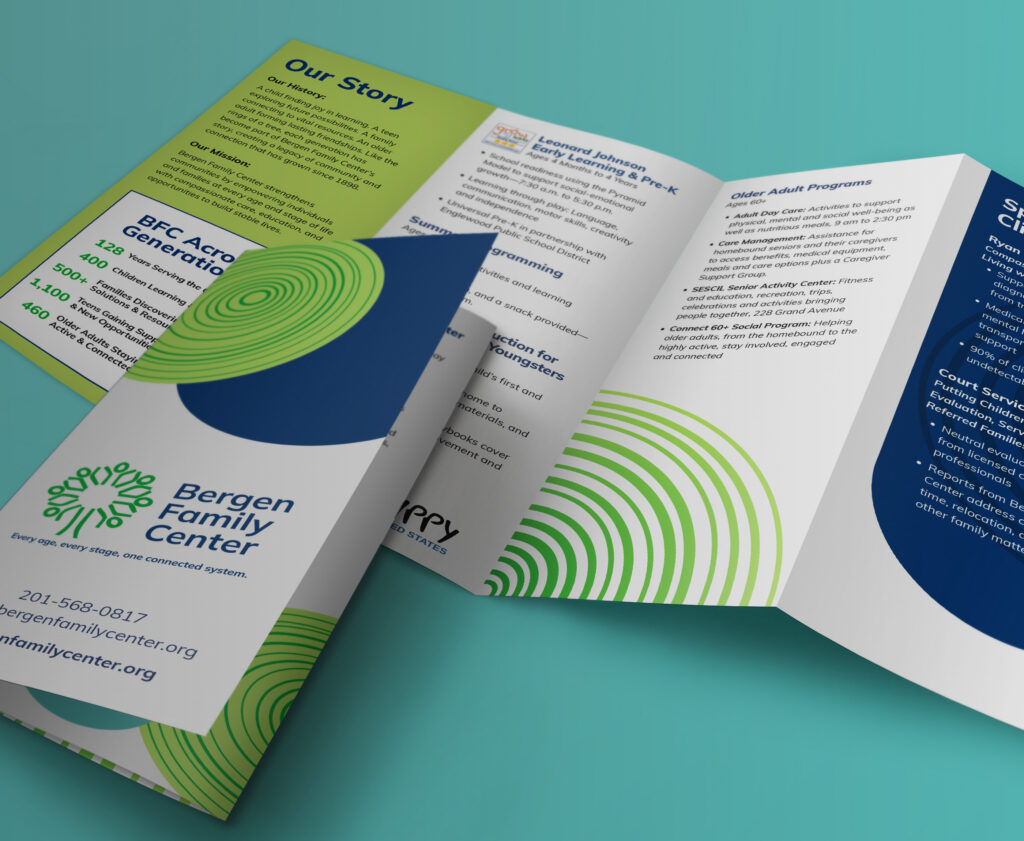
Bergen Family Center provides programs and services that support children, adults, and families throughout their lives. Without a dedicated designer or full-time marketing staff, the organization faced the challenge of creating consistent, on-brand communications across its many programs.
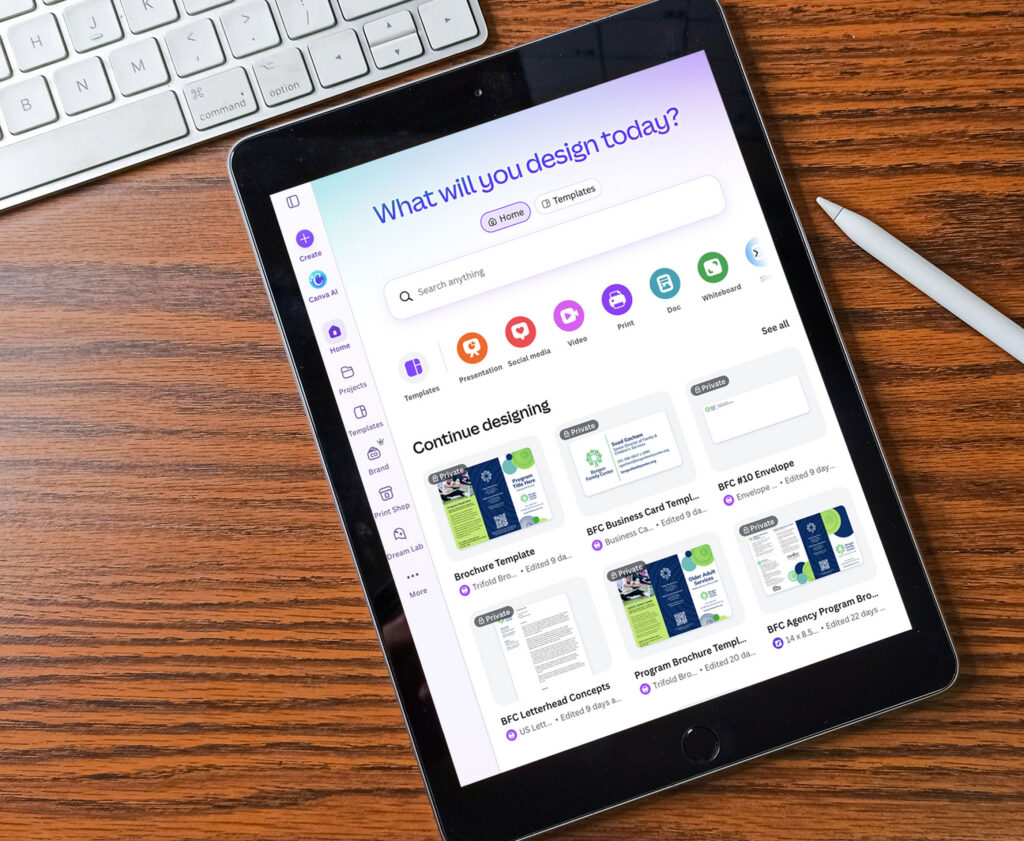
After developing the graphic style, we integrated the new guidelines to set their team up for success in Canva. We built out Bergen’s Canva brand kit with approved logos, colors, and graphics, and included instructions on when and how to use those elements. We used that framework to create custom templates for materials like brochures and flyers that staff could adapt for different programs.
The American Littoral Society faced a similar capacity challenge when promoting its Shuck It, Don’t Chuck It oyster recycling campaign. With program staff juggling outreach and educational responsibilities, the organization needed a way to promote the campaign without adding a significant design burden to their work.
We developed a Canva-based marketing toolkit specifically for the campaign, with custom designs, illustrations, and templates for social media, educational flyers, and restaurant signage. This gave people involved in the program materials they could adapt while maintaining a consistent campaign identity.
Getting More From Canva
If Canva has become an essential part of your organization’s communications, it’s worth asking whether you’ve given your team everything it needs to make the most of it.
Are the right resources easy to find? Can staff create materials that reflect your brand without starting from scratch? And does everyone understand how to use Canva in a way that supports the organization’s identity?
You may have already invested in the software and established your brand standards. But that doesn’t mean the two are working together as effectively as they could.
Sometimes it takes an outside perspective to recognize what’s missing and put the right pieces in place.
We’ve helped organizations make Canva more useful for the people who rely on it. If your team could benefit from that kind of support, let’s talk.