Whether it’s an event or a new program, chances are you need a logo. Making decisions about how elements of your organization visually relate to each other is called brand hierarchy. The goal is to connect your program or event to your organization as a whole, and a logo is the perfect place to start.
But that’s where the questions begin.
Should I replicate my existing logo? Should I create something completely different? Should I try to combine specific themes?
There are endless possibilities in logo design. Choosing the right path can seem daunting, especially when the main goal is to create a cohesive brand.
However, when your goal is to create a logo system, there are four main routes you can explore when stumped with the task of developing brand hierarchy.
Individual
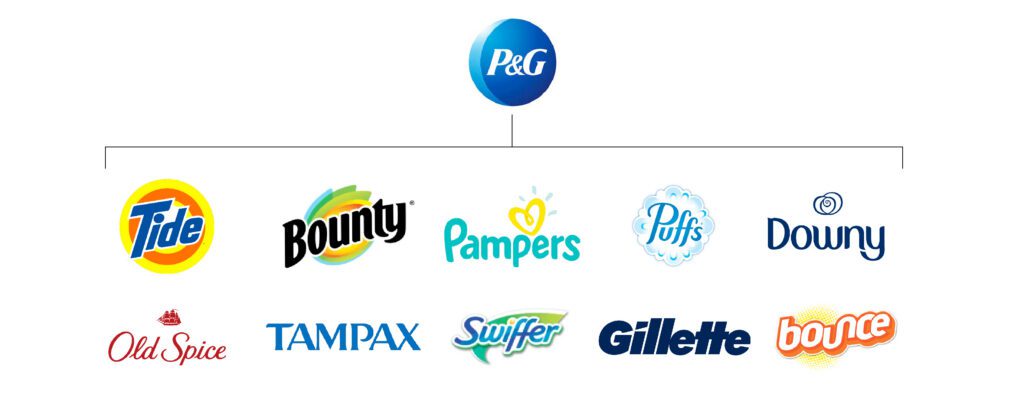
Some of the most popular parent brands (think Proctor & Gamble) utilize an Individual logo hierarchy. In this system, the parent company has their own logo and each brand underneath them has a completely different logo. The logos in this system are not connected at all. They each have different elements in terms of typography, icons, colors, etc..
An individual style has proven to work well for many large companies and corporations. However, it can also cause disconnection between the parent company and their brands. People may not realize that your organization is behind your programs or brands if there is not a clear connection.
Mom’s Quit Connection is a well known resource for quitting smoking while pregnant, but few associate it with the Southern New Jersey Perinatal Cooperative that runs it. This can work perfectly for sub-brands that stand on their own, but others may benefit from a more integrated hierarchy.
Credit: us.pg.com/brands
Masterbrand
The Masterbrand strategy is essentially the opposite of the Individual strategy. In this strategy, the parent company’s logo is replicated for their smaller entities with little change. There may be slight differences in the colors or words but larger changes, such as in font or style, do not happen.
This strategy works well if the parent organization has an established reputation in your community. Attaching your smaller brands or projects to your organization in this way could allow for that reputation to trickle down and benefit those smaller entities. Tying everything together visually creates repetition that builds recall. The overall brand image becomes pervasive and creates greater impact.
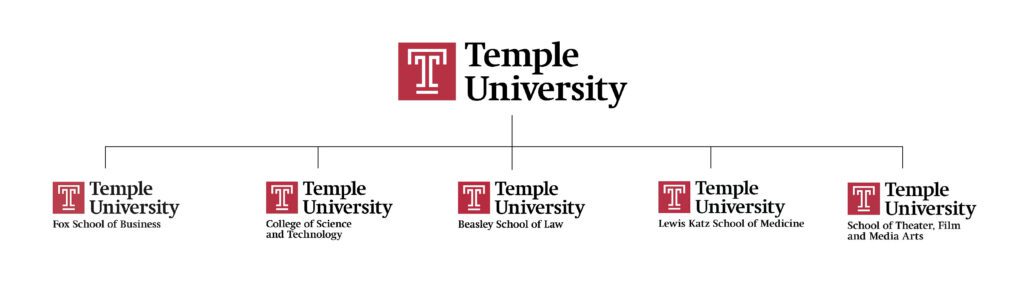
This strategy is being used by hospitals and universities. No longer is it the Fox School of Business at Temple University, but Temple University, Fox School of Business. By aligning both the words and visual structure to prioritize the Masterbrand, these entities are working to capitalize on the idea the the whole is greater than the sum of the parts.
Credit: temple.edu
Endorsed
If you feel neither the Individual nor Masterbrand strategies will work for your organization, you may want to consider an Endorsed strategy. In this strategy, each smaller entity within an organization will have their own logo, however, the organization’s name will be attached to the smaller entities’ design.
Marriott deploys this strategy well among their various hotel chains. While each chain has their own logo, “Marriott” is always attached to the logos in the same serif font. This strategy creates both cohesiveness and individuality.
Credit: news.marriott.com/brands
Visually Associated
In a Visually Associated strategy, each entity retains style freedom while maintaining common traits with the parent organization. This may involve a shared color palette, brand fonts, or a graphic element in the logo.
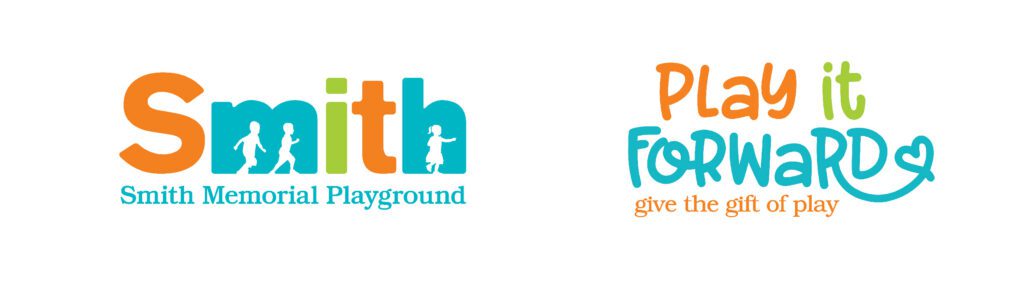
For the Play it Forward Campaign by Smith Memorial Playground, we applied this strategy. Our aim was to create a distinctive icon for the campaign while ensuring its association with Smith.
Starting with Smith’s brand colors, we introduced a pale yellow to differentiate the campaign content. The main words were presented in a new font to convey playfulness, while the tagline maintained the same brand font and lower-case style.
Maintaining visual association requires careful adjustments. There’s no set rule for how much you can alter without losing the familial look. Consider elements like color, font, scale, space, and style to strike the right balance.